
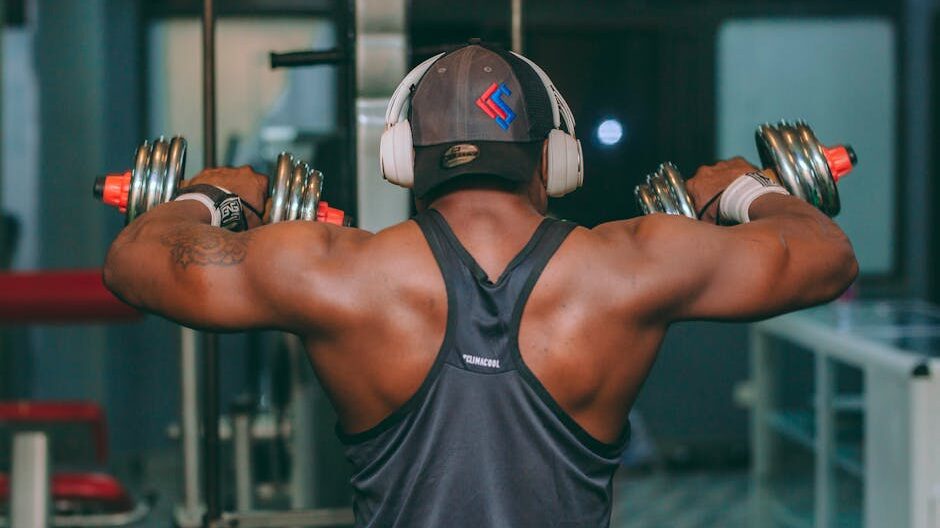
One of the most confusing aspects of gym training is understanding the difference between reps and sets in workout routines. How many reps and sets should you do, and most importantly, how can you use them effectively for muscle growth?
This reps vs. sets guide will help you understand the best reps and sets for muscle growth and hypertrophy.
If you don’t understand the science behind reps vs. sets, you won’t get the desired results, no matter how hard you work out in the gym. So, let’s understand these two concepts in detail today and learn how you can optimize them according to your fitness goals.
What Are Reps?
The word “Reps” is short for “Repetitions.” It refers to the number of times an exercise is performed.
For example: If you are doing bicep curls with dumbbells and you lift and lower the dumbbells 10 times, that means you have completed 10 reps of that exercise.
The number of reps is directly related to your intensity. If the weight is very heavy, you will be able to do fewer reps. If the weight is light, you will be able to do more reps.
What Are Sets?
Sets mean a group of repetitions. That is, how many times you perform an exercise in one set, followed by a rest period. For example, 3 sets of 10 reps means three groups of 10 repetitions each, with a 1-2 minute rest between each group.
The purpose of sets is to create total muscle engagement. More properly planned sets = more muscle growth = greater muscle mass.
The Difference Between Reps and Sets (Reps vs. Sets)
| Reps | Sets |
| The number of times you perform an exercise | A group of repetitions |
| Reps stimulate and fatigue the muscles | Sets help overload the muscles for growth |
| Shows the intensity of the workout | Shows the total volume of the workout |
| Example: 8 reps, 10 reps, 12 reps | Example: 2 sets, 3 sets, 5 sets |
| Each rep is one complete movement | Each set contains multiple repetitions |
| Helps determine how heavy the weight is | Shows how much total work is done |
Why Reps and Sets Are Important for Muscle Growth
When you lift weights, your muscles’ microscopic fibers are stressed, causing micro-tears. During rest, the body uses protein to repair these damaged muscle fibers, making them stronger and larger than before. This is called “muscle hypertrophy.”
This is where reps and sets come in:
The number of reps determines the type of stress placed on the muscles – whether we are building strength, increasing size, or developing endurance.
The number of sets determines the total volume or workload placed on the muscles. This volume is considered the most important factor for growth.
Best Reps and Sets for Muscle Growth
| Goal | Reps | Sets |
| Muscle Growth (Hypertrophy) | 8–12 | 3–5 |
| Strength | 1–5 | 3–6 |
| Endurance | 15–20 | 2–4 |
| Fat Loss | 10–15 | 3–4 |
Example Workout (Muscle Building)
If you are doing a chest workout:
Bench Press
10 reps × 4 sets
Dumbbell Fly
12 reps × 3 sets
Push-ups
15 reps × 3 sets
This is a perfect hypertrophy routine for muscle growth.
Reps and Sets for Beginners
If you are a beginner and have just started going to the gym, this table is for you.
| Exercise | Reps | Sets |
| Push-ups | 8–10 | 3 |
| Squats | 10–12 | 3 |
| Pull-ups | 5–8 | 3 |
| Dumbbell curls | 10 | 3 |
Rest Intervals
The amount of rest you take between reps and sets also matters a great deal:
Strength (1-5 reps): 3 to 5 minutes of rest (the body needs more recovery after lifting heavy weights).
Muscle Growth (6-12 reps): 60 to 90 seconds of rest (this creates metabolic stress, which is necessary for growth).
Endurance (15+ reps): 30 to 45 seconds of rest.
Common Mistakes People Make
Quantity over quality: It’s better to do 8 correct and controlled reps than 20 incorrect ones (Mind-Muscle Connection).
Not getting enough rest: Not giving your muscles time to recover can hinder growth.
Always doing the same routine: Slightly change your rep and set patterns every 4-6 weeks.
Ego lifting: Lifting excessively heavy weights just to complete sets can lead to injuries.
Conclusion
The right balance of reps and sets is what transforms you from an average person to an athlete in the gym. Reps and sets aren’t just numbers; they’re the formula for muscle growth. If you want to build muscle, follow the magic number of 6-12 reps and 3-4 sets. Gradually increase the weight and track your progress.
Now you understand that by choosing the right reps and sets, applying progressive overload, and maintaining a good diet (1.6-2.2g/kg of protein), you can build muscle quickly. If you choose the right reps, sets, weight, and rest periods, your body will definitely grow. Remember, your only competition in the gym is yourself. The right sets and reps you do today will build a stronger body tomorrow.
FAQs
FAQ 1: What is the difference between reps and sets?
Reps (repetitions) are the number of times you perform an exercise, while sets are a group of repetitions. Both are essential for building muscle and strength.
FAQ 2: How many reps and sets are best for muscle growth?
For muscle growth, the best range is usually 8–12 reps and 3–5 sets per exercise.
FAQ 3: Are more sets better for muscle growth?
More properly planned sets increase muscle growth, but too many sets can lead to overtraining. Quality and recovery are more important than just volume.
FAQ 4: Should beginners use the same reps and sets as advanced lifters?
No. Beginners should start with 8–12 reps and 2–3 sets to learn proper form before increasing volume and intensity.
FAQ 5: What happens if I do too many reps with light weight?
Doing too many reps with light weight mainly builds endurance, not muscle size. For muscle growth, moderate to heavy weights with 8–12 reps are best.